Microservices vs Monolithic Architecture: Which is Right for Your Project?
February 16, 2026 • Noor Ul Sabah
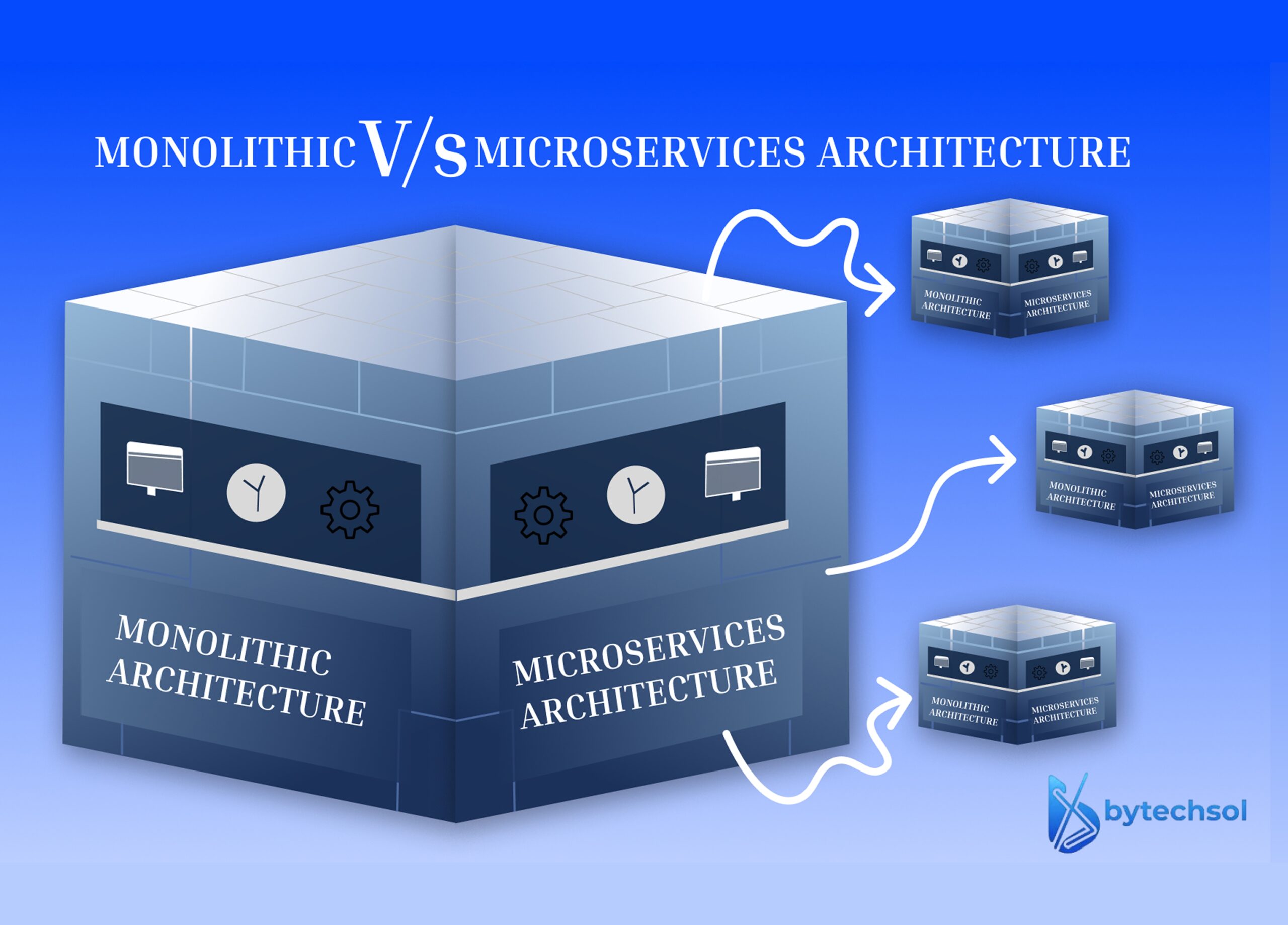
The selection of software architecture is one of the most important decisions that determine success of a project. The two most common approaches are microservice architecture and monolithic architecture. These two methods also have advantages and disadvantages, as well as the most suitable cases of use, and this is imperative with the rapid movement in technology. The wrong option may lead to the issue of scalability or increase in costs, or even delays in the project. An examination of your project needs, the capacity of your team, and long-term goals allows you to choose the architecture that can help you to easily develop and expand your project in lthe ong term of your life.
This guide will discuss the microservices and monolith architecture, their pros and cons, and provide a piece of advice that would allow you to pick the most suitable architecture to use in your project.
What is Monolithic Architecture?
The monolithic architecture is an obsolete way of developing software, in which the entire application is built as a single and distinct program. All individual components are united within one-well integrated codebase, and it is not difficult to code during the initial stages.
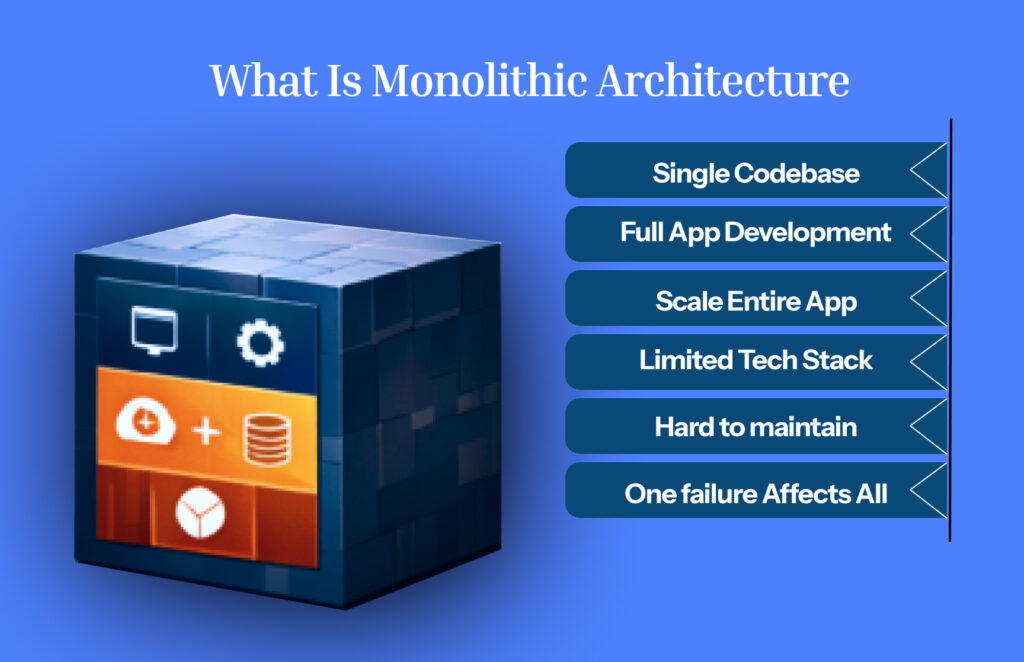
Monolithic architecture reflects the type of system in which the user interface, the business logic, and the layer of accessing the database are all just a part of one codebase. The implication of the tightness of the components is that any change or update to one component of the application would possibly require a re-deployment of the whole system.
This is more cost-effective to develop, test and deploy in the beginning, particularly when the system is small. During early stages of development, developers can develop within a single environment, reduce the number of dependencies and deliver updates faster. Nonetheless, as the use of the application grows, a monolithic system might be more difficult to maintain and scale.
What is Microservices Architecture?
Microservices architecture is a new model of software development, which is concentrated on modularity and flexibility. The system is constructed by creating smaller autonomous services that collaborate with each other in place of one large application.
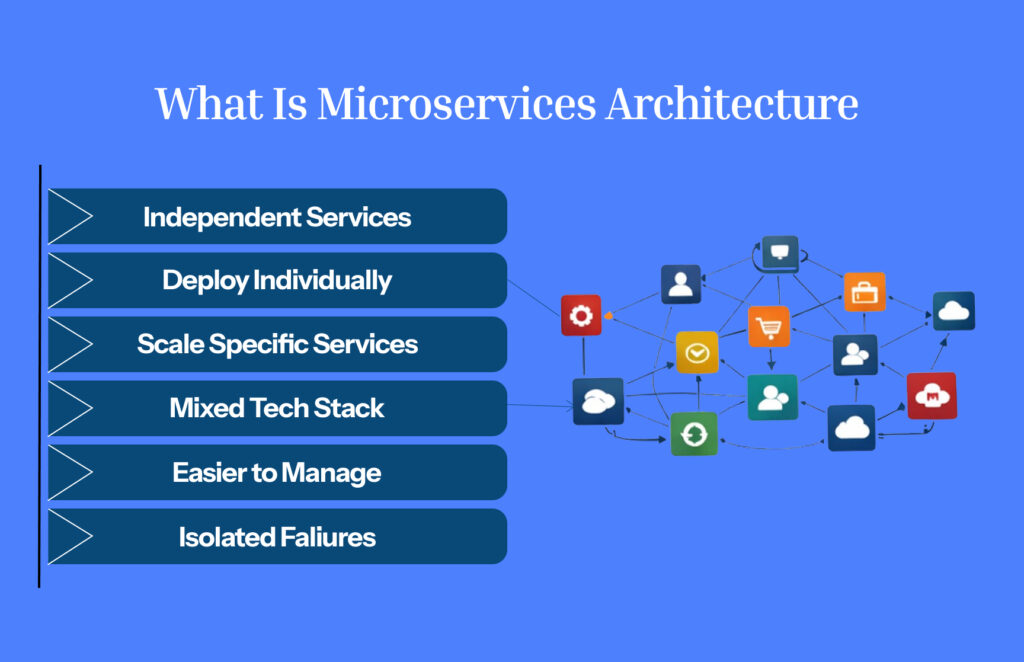
All microservices deal with a particular function and interact with other services via APIs. There is a loose couple between these services, i.e., they can be created and deployed, maintained, and scaled without impacting the whole application.
An e-commerce service based on microservices, as an example, can contain individual services of product management, user verification, payment, and notification. When there is a requirement for payment service updating or further scaling, it can be done separately,y and the rest of the system will keep on running smoothly.
Microservices vs Monolithic Architecture: Key Differences
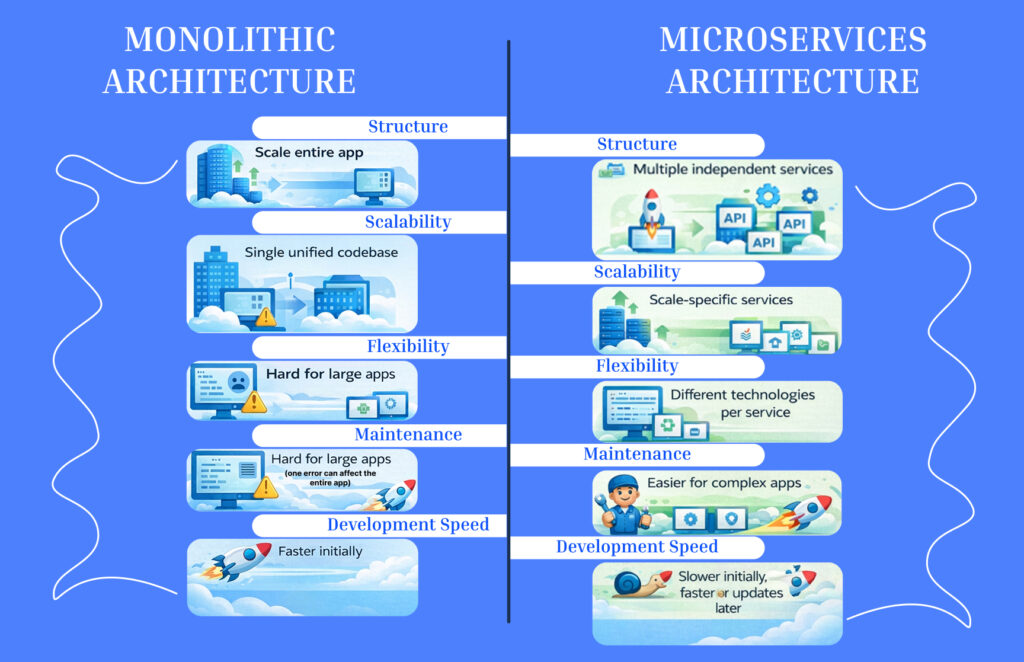
| Feature | Monolithic Architecture | Microservices Architecture |
| Structure | Single unified codebase | Multiple independent services |
| Deployment | The entire application is deployed at once | Services deployed independently |
| Scalability | Scale entire app | Scale-specific services |
| Flexibility | Limited technology options | Different technologies per service |
| Maintenance | Hard for large apps | Easier for complex apps |
| Fault Isolation | One error can affect the entire app | Failures contained within a service |
| Development Speed | Faster initially | Slower initially, faster for updates later |
The choice between these two architectures depends heavily on project size, team capability, and growth expectations.
When to Choose Monolithic Architecture
Monolithic architecture is a robust option where simplicity, speed, and reduced overhead in development are more valuable than sophisticated scalability. It is effective mostly in low-maturity products and projects that have specifications.
Small Teams and Limited Budgets
Monolithic is a more viable choice in the case of startups or small development teams. The whole application is developed and deployed as a single entity, which means that it needs fewer infrastructure elements and reduces operational complexity. This leads to lower development and maintenance costs, which are easier to handle with a small number of resources.
Simple Application Logic
A monolithic structure is useful in easily flowing applications that are highly intertwined. By having everything in a single codebase, in these situations, it is easier to debug, test, and develop with less unnecessary architectural overhead.
Short-Term Goals or MVP Development
Monolithic architecture has advantages in terms of speed since it is less time-consuming to develop and deploy. It is best suited to make Minimum Viable Products (MVPs) or proof-of-concept apps, where companies would like to test ideas and get user feedback without investing time to create a complex system design.
Minimal Scalability Requirements
A monolithic deployment is usually adequate in case an application is not anticipated to grow fast or process large traffic. The fact that scaling is available on an application-wide basis is useful when a predictable load is needed, and that scaling eliminates the complexity of trying to scale independent services.
Best Fit for Early-Stage Projects
All in all, monolithic architecture is more applicable to startups trying something new, internal business tools, or businesses with one focused product. It provides a quicker route to the market, with the development and operational work being manageable.
When to Choose Microservices Architecture
Microservice architecture is most applicable in projects that are highly scalable, flexible, and in need of long-term expansion. This method divides the system into smaller and autonomous services that collaborate instead of creating a single application.
Large or Growing Development Teams
Microservices are effective in companies with several development teams. Because each service can be developed, deployed, and maintained, the teams do not have to block each other, as they can work in parallel. Consequently, the pace of development increases and teamwork becomes more effective.
Complex and Feature-Rich Applications
Microservices architecture is useful in applications that have complicated business logic, more than one module, or changing requirements. The separation of features into distinct services allows teams to make changes to or add additional functionality to a system without impacting other subsystems within the system.
High Scalability and Performance Needs
Applications that are projected to grow rapidly or experience a change in traffic should have microservices. Every service may be scaled separately on demand, enhancing performance and reducing infrastructure expenditure. Thus, this solution is also suited to high-traffic websites and business applications.
Frequent Updates and Continuous Deployment
Microservices allow more flexibility in case your project needs to be regularly updated, release new features, or fix bugs. Without causing downtime, individual services can also be deployed, and allow continuous integration and delivery (CI/CD) and faster innovation.
Long-Term and Enterprise-Level Projects
Microservices architecture is also a good option when the nature of the project is long-term, and all factors of scalability, reliability, and adaptability must be considered. The first arrangement is more complicated, but it is the best in the case of enterprise systems and other digital products that are growing fast.
Advantages and Challenges of Each Architecture
Monolithic and microservices architectures have their own advantages and disadvantages. So, knowledge of their strengths and weaknesses allows business decide the appropriate structure to be selected to support scalability, performance, and long-term maintenance.
Monolithic Architecture Advantages
Monolithic architecture tends to be chosen when using small projects and initial applications. It focuses on minimalism and more rapid execution, particularly where the speed of development and the cost dominate.
- Easier Development and Deployment
Monoliths are easier to construct, code, test, and deploy at first since all the parts of the program are present in a single codebase. This reduces coordination overhead and speeds up early development. - Straightforward Monitoring and Debugging
Small to medium-sized applications know their errors and performance problemsmore easilyr because logs and processes are centralized. - Lower Initial Development Costs
Monolithic architecture is cheap and simple to maintain due to the low infrastructure and DevOps requirements of MVPs and startups.
Monolithic Architecture Challenges
Monolithic systems may get hard to scale and maintain as the number of applications increases. These issues are usually manifested when business needs change very fast.
- Complex Maintenance Over Time
A highly integrated codebase renders development dangerous as modifications in one section can influence the rest of the application. - Inefficient Scalability
Scaling involves the complete copying of an application, even though only a single feature will require additional resources. - Limited Flexibility and Innovation
The components are highly interdependent and make it hard to adopt new technologies or frameworks.
Microservices Architecture Advantages
Microservices architecture is based on complicated, scalable, and high-traffic applications. It allows flexibility and resilience in that it breaks the system into services, which are independent.
- Independent Service Scalability
All services are scalable depending on the demand, and these measures improve performance and eliminate the waste of resources. - Improved Fault Isolation
In the case of failure of one service, the other services keep running, thus enhancing reliability and uptime. - Technology Stack Freedom
Various services can be offered by utilizing various types of technologies by teams, and thus, may be more optimized and innovative. - Faster Continuous Deployment
Independent deployments enable frequent updates and smoother CI/CD pipelines.
Microservices Architecture Challenges
Microservices architecture has operational and technical complexity despite the advantages. Thus, it involves powerful planning and talented teams.
- Higher Development and Management Complexity
The coordination of several services adds to the development, testing, and maintenance. - Advanced DevOps and Infrastructure Needs
Microservice relies on containers, orchestration services, monitoring, and automation services, whichares expensive to run. - Inter-Service Communication Overhead
The communication between the services can also be based on the network and can add some latency, and it should be carefully managed with the API and performance.
How Bytechsol Helps with Software Architecture Decisions
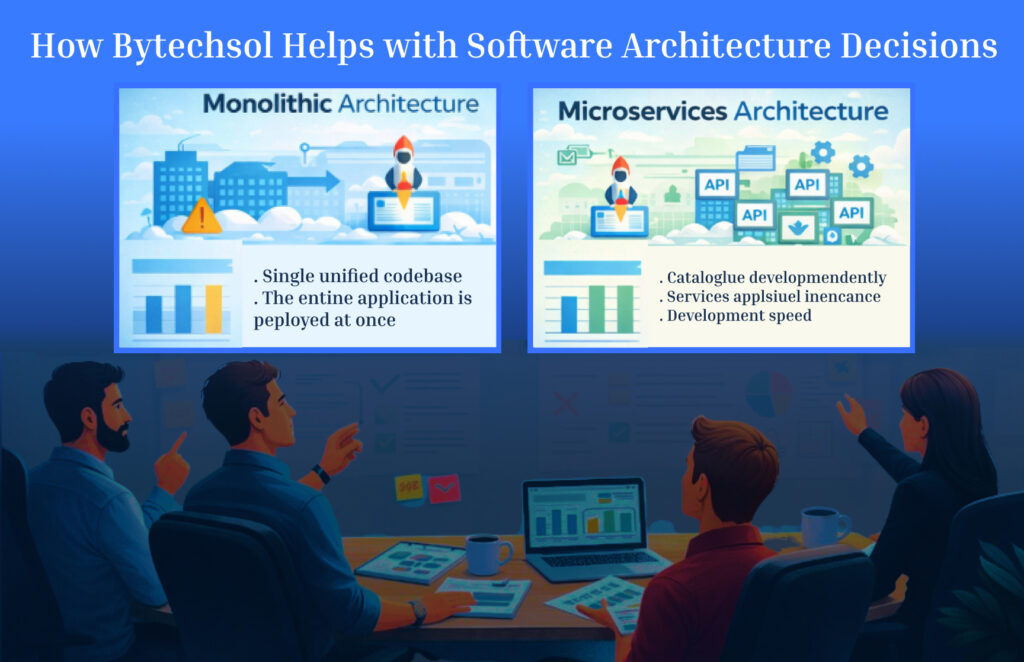
At Bytechsol, we advise businesses to select the appropriate architecture depending on the complexity of the project, the number of team members, and the long-term objectives. Our professionals create microservice architecture on scale applications and monolithic architectures on small applications.
Our specialization is on secure, maintainable, and high-performance software, with the use of modern development practices and best practices in architecture. Bytechsol will help you build a high-performing software that will not fail you today, and tomorrow, when your business expands, it will be ready to go hand in hand.
Final Thoughts
Microservice and monolithic architectures are both significant in the current software development. Thus, business purposes should always guide the decision made and not trends.
Monolithic architecture is simple to use, quicker to market, and less expensive initially, which makes it appropriate to use during the early project stage. Conversely, microservices architecture offers scalability, resilience, and long-term and enterprise-level application flexibility. It is possible to select an architecture that meets your business goals today and in the future by assessing your strengths and weaknesses as a team, technical needs, and future expansion.
In case you do not know which method to use in your project, cooperating with skilled software architects can assist you in making a long-term decision.